Sunday, December 6, 2015

Is This The End???

Sadly yes it is, the end of this blog series that is. My semester is ending in a short 12 days (Yes, I am counting down), not only does this mean that I have one semester of College left, but it also means that my Marketing class and thus this blog is coming to a close. Even my professors are happy that the end is near, in one of my other classes my professor let us out early simply because he did not feel like doing the next activity. Getting out thirty minutes early was like an early Christmas present for me that I was very happy to receive. I can’t wait to go home to see my family and enjoy the rest of the Holiday Season, this is my favorite time of the year and I love to spend it with my loved ones. The meme below perfectly depicts how I feel at the end of the semester.

These past weeks have been so fun and I have learned a lot from running this marketing blog. I’m can say that although I have probably gave you guys some new information I have learned quite a lot from you. I know, I know it’s cliché of me to say that but it’s true. Being able to repeat information that you have learned is good and all but the ultimate test is being to teach someone else. It is through writing these blogs for you guys that I have been able to get a better understanding of the various marketing topics I have discussed.

To review some of the concepts that I found most important for me to remember as a consumer. As you can imagine the marketing mix is so important, it really describes why products/services are put into existence and how companies get consumers to purchase their products. As you may remember, the marketing mix or the 4 P’s consists of: Product, Price, Place and Promotion. One thing that I have learned from this class is that the “Place” goes far beyond where the final product is sold, it also includes where it is manufactured, how it is distributed and things of the like.


Another main concept is the many different needs that consumers have which drives us to buy. Again you guys may remember the Hierarchy of Needs, which basically states that there are different needs that we have to fulfill through our actions. If you look at the image below you see that psychological needs are the most important as they provide you with the basis to live a basic life. The sad thing is that some people may use this hierarchy of needs as an excuse to buy when that is not always the case. Of course for psychological needs you need to have money to purchase a home, clothes, food and the other necessities. However the ultimate need is to fulfill the self-actualization needs. This need goes beyond the retailer. These needs can only be fulfilled by having morals and seeing yourself as valuable. What can make it difficult for some is that they associate their purchases with status and that the more things they have will cause them to be accepted.


In my eyes the best way to fulfill the self-actualization is to obviously fulfill the other needs first but once you reach that time do the things you are called to do. Do the things that make you feel like you’ve made a difference or reflect your morals. For me, if I can afford to I would love to do more service trips both locally and abroad. Here at Saint Michael’s College I have been blessed to serve twice in the Dominican Republic. This trip really changed my view on life and made me want to serve in other ways. I’m not too sure if service is my exact purpose but I know at feel very at ease when I am serving others. Have you guys had a moment like this?


Well this is it guys! I hope you guys have enjoyed going along this journey with me as we all learned the many avenues of Marketing. I know I sure have, this was my first blog ever and although it was a part of class I have enjoyed every second of it. I hope that I helped you guys in some way shape or form. Have a good one! 
Black Friday!!!

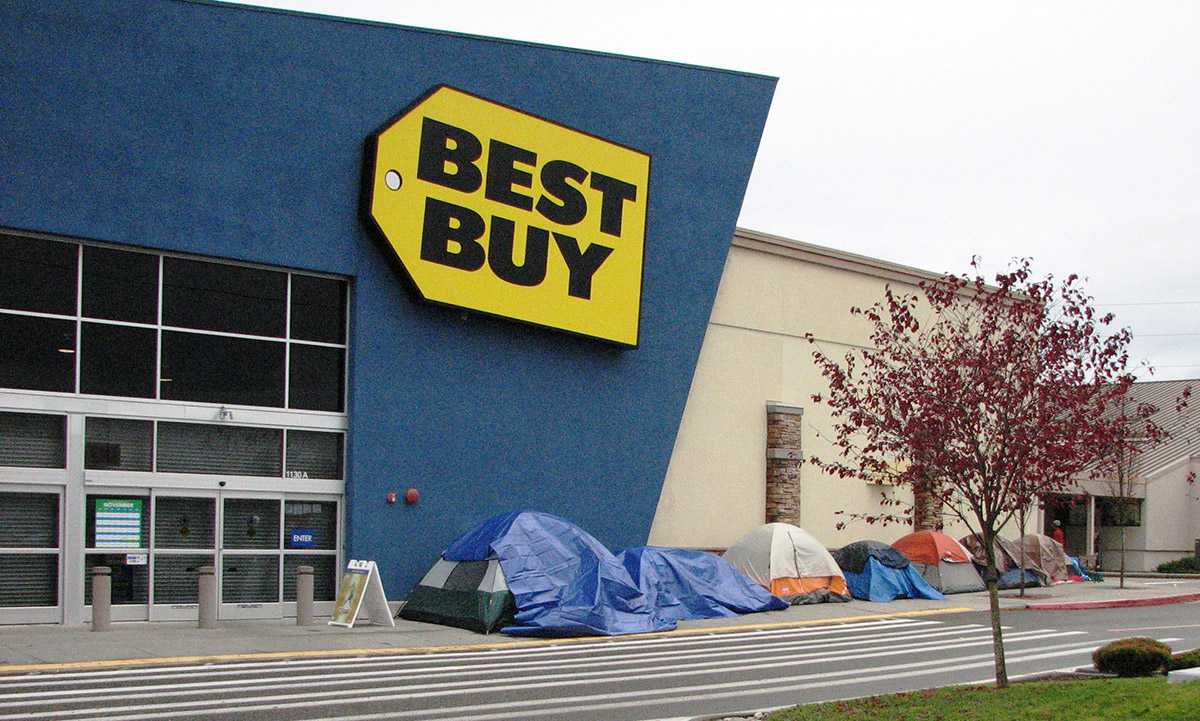
Hey Guys!! I hope you had a wonderful Thanksgiving!! Last week in my marketing class, we talked about pricing and one thing that came to my mind especially with Thanksgiving coming up was Black Friday & Cyber Monday. Since, we host Thanksgiving at my house, I don’t really participate in Black Friday because I just don’t have the energy to stand in lines early in the morning for deals. I guess it is just not that big of deal to me. However, for some Black Friday is more than a one day affair; we all have seen on the news those people that start camping out in front of stores hours in advance with some starting days in advance. To each his own but I can never see myself doing that.


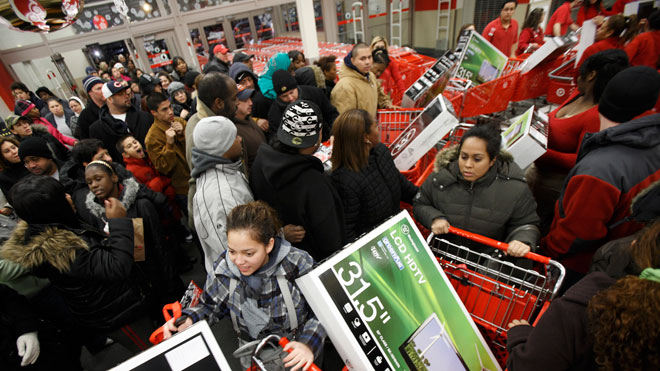
These people aren’t “crazy” though, if you find a need/want for the products on sale I say go for it. Some of those discounts are insane and that is what drives people to the stores right after Thanksgiving Dinner. Retailers are making their Black Friday sales better every year in hopes of attracting more consumers than before. Not only that but they are starting before actual Black Friday, many retailers start their Black Friday sales on Thanksgiving Day. This is crazy because Thanksgiving, a day that is supposed to be for family is slowly turning into a materialistic holiday. With more retailers opening stores on Thanksgiving, not only does it push employees away from their families but our society’s growing need to have more stuff soon enough these sales will draw people away from their families.

Now to relate all of this to my marketing class, one of the things we talked about where the steps that a company may go through to reach a price for their products. We talked about the first one (Identify Pricing Objectives & Constraints) in the last post. This one is relevant to the Black Friday sales because retailers have to look at what their competitors are selling similar products for. One strategy for this is for a retailer to price their item lower so that they can get more traffic in their store and hopefully increase their profits. This ideal goes with the step two of this process which is to, Estimate Demand & Revenue. Seeing as though Black Friday is such a huge day for retailers, the demand for various products is very high and retailers can use this to their advantage with their pricing.


The final step is to Determine Cost, Volume & Profit Relationships. During the Holiday Season, retailers have to pay close attention to their costs because they may have extra workers to combat the increased traffic. Most people would think that having the lowest price would benefit a retailer as it would draw consumers to their store, however this is not always the case. If the price is so low that it prevents them from breaking even then this will surely hurt their bottom line. So with all of this in mind, the ultimate question is do retailers make a substantial amount of money during Black Friday and Cyber Monday? With all of the additional costs from having more employees working substantial hours to having the power on for longer than normal operating hours to the extra advertisement, it can be more difficult to make a profit. Another thing to consider is that although the deals may be insane, our society is very technologically based and online deals attract more people than combating massive crowds when there aren’t nearly enough items to go around. So many things to consider. Well thanks for joining me today guys, until next time!


Monday, November 16, 2015

Pricing of Products/Services!!

Hi Guys! Thanks for joining me for another blog on this thing called Marketing! Let’s get right into it! A big piece of whether a company has a successful product is the price. If a product has a lower price than of course that attracts more people to the product, but if it is higher than that will attract less people depending on their income. There are several factors that a company looks at while determining the price of their product. These factors include, profit, sales, market share, unit volume, survival and social responsibility. If a company if focused on profit than they will set the price at a level that will draw enough consumers to purchase their product and create a profit. Let’s look at Ben & Jerry’s, although their main goal and the goal of any company is to make a profit they have another pricing factor of social responsibility. With this goal they have to set their price higher to account for all of the fair trade, organic and non-GMO products that goes into their products.

Another factor that we all probably know about is competition. If a company has a lot of competition than they will use their competitors price to help determine the price of their product. There are 4 types of competitive markets, these include: Pure Competition, Monopolistic Competition, Oligopoly and Pure Monopoly. The one that we as consumer will see in most of the products we purchase would be monopolistic competition, this is because in our daily purchases we often find various brands that sell the same product. For instance, if we look at peanut butter, there are various brands available for us to purchases even with different types of peanut butter (Organic, natural, smooth & chunky). The private brands such as Skippy and Jiff compete with each other in regards to price and advertising to get consumers to purchase their products and maintain their loyalty.  


(Kerin, Hartley, & Rudelius, 2015)

The major factor that controls the price would be the demand from us as consumers. If we create a high demand for certain products than the price will be affected by that. Within consumer demand there are a few factors that determine our demand. These factors are, consumer tastes, price & availability of similar products and consumer income. To go back to the idea of competition, if there are several brands of the same product, with similar taste then consumers will usually go with the less expensive brand. For instance milk, a product that generally taste, most consumers (unless they are loyal to a particular brand) will search for the milk priced the best and purchase that brand.
 So as you probably already knew, we as consumers play a major role in the pricing of products. If a product is set too high, we simply do not buy it and soon enough it will decrease as the company would rather decrease the price as a means to increase their sales. This is the idea of inelastic demand, when a products price is decrease by 1% results in a 1% or greater increase in sales. Think of the various times you’ve visited the store and products have been on sale, like 50% off or BOGO sales, these are all a way to get consumers to purchase the product so that the company can increase their sales.  There are various aspects to the pricing concept of marketing that we will have to get into during a later post. Until next time guys!!


Successful Brands

Hi guys! All this talk about products/services makes me think about the various products/services that have come and gone in our lifetime. To relate back to the Product Life Cycle, which has four aspects to include: the length, shape, the product and the life cycle/consumers. If we look at the length and shape aspect these have to do with how the consumer receives the product. The time it will take for a product to move through the stages of the life cycle (Introduction, Growth, Maturity, Decline) is based on if the consumers find value in the product.

Since we are living in a technological age, let’s talk about how the first computer was received by consumers. Since, the first computer was a high-learning product (requires the consumer to gain significant knowledge to use the product) the introduction stage for the first computer would be much longer than if a new model of computers were to come out today because it would be a low- learning product (requires little learning by the consumer).
This all makes since because if we as consumers have to learn a significant amount of new information on how to use a product then it will take us longer to actually try it because it will take some time to gain the benefits of it. This is a part of the concept called the Diffusion of Innovation. The ideal is that there are 5 categories of consumer based off of their purchasing characteristics. For instance, we all know those individuals that are willing to take that chance and you will often find pre-ordered the new version of the IPhone or stand outside to get a pair of the first Google glasses. These individuals is who we would call the Early Adopters, they help to create social standards because of their courage to try new products. Do you consider yourself an Early Adopter? Or are you with the Early Majority who usually wait a while before making new big purchases such as technology?


(Kerin, Hartley, & Rudelius, 2015)


            If we look at fashion and fad products, I’m pretty sure we can all think of some products that were simply not successful at all and we can all think of some fashion trends that have died out and possibly returned. In terms of fad products, which are introduced and then decline, an example would be car tattoos, which were sold in Southern California as a way to have removable and reusable car graphics. An example of fashion products would be high-waisted jeans, these were popular in the 1940s and 50s but have made a comeback.  What are some examples of Fashion or Fad products that you can think of? Until next time you guys! 

Sunday, October 25, 2015

The Life of a Product

Hello guys! Last time we talked we discussed basis of the creation of new products. To go along with that theme we will be discussing how long products lasts in the market and the multiple stages involved. This idea is called the Product Life Cycle, which again talks about how a product goes through the marketplace. There are four stages and as you can imagine the first one is the Introduction Stage. During the Introduction stage the company will experience an increase in expenses as there is a lot of money that has to be spent on marketing to make the consumers aware of the product and thus causing them to purchase. An example of a product in the introduction stage would be Keurig Kold, this will be a special Keurig that is used to make soda, something similar to that of a soda stream. What makes the Keurig unique is that they have pods with the soda brands we all know like Coca-Cola and you do not have to worry about the C02 component, which is convenient as all Keurig products are.


The next stage in the cycle is the Growth stage, as you can imagine at this stage is when the product really begins to create profits. This is because the advertisements have gained major awareness to the point that consumers are more than willing to purchase the product. On the other hand at this stage, competition begins and therefore companies often make alterations to their product to make their products stand out and creating brand loyalty. An example of a product in the growth stage would be smart watches. Once the Apple Watch was released other companies were itching to get a model of their own in the market. Apple, due to prestige has been able to maintain their brand loyalty among consumers despite the higher price. Apple also makes modifications to better the product, as do competitors. With this, I believe in the smart watch industry, Apple succeeds because of their innovation, quality and brand loyalty.


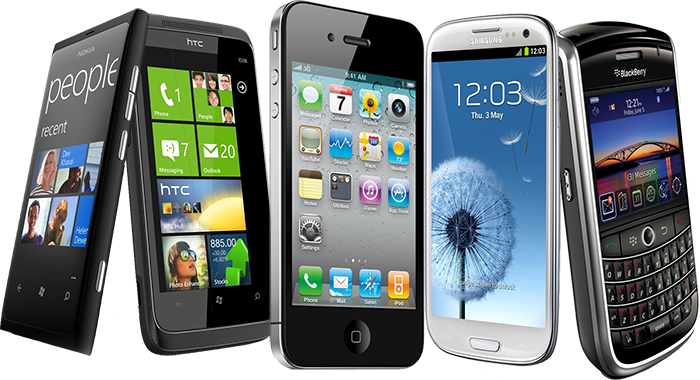
The third stage of the cycle is Maturity, at this stage profits decrease because majority of consumers are repeat consumers. In addition, profits also decrease because of the strong competition in the industry. An example of this would be smartphones in general. Although, I believe that Apple is still the most popular brand in that industry, it is also expensive. With this many consumers are going to other brands because they offer the same technology or better at a reduced rate.


The final stage as you can imagine is Decline. During this stage profits drop significantly and can cause a company to eliminate a product entirely (Product Deletion). In regards to technology, some examples of products that have reached decline would be desktop computers. Although, they are still prevalent in society they are not as common as the laptop or tablet.


Do you guys remember MP3 players? I do, I remember being so excited when my mom got me one. Currently, you probably cannot find anyone who still has a MP3 player. With the advanced technology of our society today, most consumers have smartphones and thus are capable of having music on their phones. Even the IPod is in decline, because if you have an IPhone then you basically have an IPod as well. Everything that we need is being put into one product and in the near future there will be many more declining products. What products do you guys think are in the Introduction, Growth, Maturity or Decline Stage? Just look around or on social media and you will be able to find examples rather quickly. Alright guys, that’s all for today! Talk to you guys in the next post!
New Products & Services!!

Hello Guys! In our last blog we discussed the purchasing decision process. Now we are going to discuss the products and services that companies create to convince us to buy. First, let’s talk about the categories of things that companies try to sell to consumers. The larger, overarching topic is a product which is a good, service or idea that can have intangible or tangible aspects as a means of satisfying the consumer’s needs. Within that, a good is a tangible item that can appease some or all of the five senses (Kerin, Hartley, Rudelius, p. 248, 2015). For instance, a smartphone is identified as a good because it is tangible and the consumer can feel it, see it and hear it. A service on the other hand is an intangible item that satisfies consumer’s needs via the exchange of money from the consumer.
Now that we have the basis out of the way we can look more at the thought process a company goes through before introducing a new product. It’s easiest for companies to products that are under the category of continuous innovation. These products do not require much work done but us the consumers, which is nice as it makes it easier for us to decide to purchase the product. An example of this would be the release of the new IPhone 6S, although it is new it is a continuous product as it does not require much change in the consumer’s behavior when using the product.


The next category of products are dynamically continuous innovative products. These products, although new to consumers, the company does not have to provide too much information to use the products. An example of this that we discussed in class was the new Keurig line collaboration with Campbell’s Soup. The Keurig machine would still be the same but consumers would have to add a step to gain a nice mug of soup. The idea is to empty a packet of noodles into a mug and select a broth to brew. After a few minutes, you would have a mug of warm, Campbell’s Soup. Interesting right!


 A category of products that may be more difficult to introduce would be a discontinuous product, this is because it requires new learning by the consumer. This creates another step for the consumer before they can have their needs satisfied. An example of a discontinuous innovative product would be an electric car; although the consumers using it would have knowledge of how to use a car they would have to learn how to charge it. They would also have to change their whole driving process, as the charge only last a certain amount of miles and the consumer will have to make sure they a prepared if they need to travel further than the allotted time.


With all of this information, there is so much that a company must go through before deciding if they want to add a new product to their brand. There is a seven stop process that the image above depicts. Companies go through this process as a means to prevent products from failing which we all know is important to increase the bottom line. It involves a lot of work from gathering ideas from internal/external sources to conducting survey’s or focus groups to see if consumers would like the product. Alright guys, hopefully you guys have some idea about the different types of products in the industry. See you all soon!

Monday, September 28, 2015

Why Do We Buy?


Hello guys! In this week’s marketing class I learned about consumer behavior, which is the process we as consumers go through when we are making purchases. There is a 5-step process called the "Purchase Decision Process" it gives you the basis of the steps we follow either consciously or subconsciously when making a purchase.


https://consumervaluecreation.files.wordpress.com/2012/02/chap_05_011.jpg 

Now there are different types of purchases which include extended purchases, like a house or car; limited purchases which can be a cell phone and lastly routine purchases which can be groceries. These steps also can be applied to services as well, for example an extended service could be a college or medical care. One of the most interesting steps of this process if the “Post-Purchase Behavior” step, this is because if we are satisfied with our product/service we are less likely to speak about it unless the conversation is prompted but forbid we are not pleased with the product/service we as consumers are more likely to take our frustration to social media, tell our family and friends or even go to the company.

In class we also spoke about the different level of needs that we have in relation to the products/services that we purchase. Maslow’s Hierarchy of Needs is one that describes it well. This hierarchy of needs falls under the motivation that we have towards the purchase of certain products/services. Motivation is defined by McGraw Hill as “The energizing force that stimulates behavior to satisfy a need”. The chart below is Maslow’s Hierarchy of Needs and the level of importance goes from top to bottom meaning that the Physiological Needs are essential and need to be fulfilled first as without them the rest cannot follow.


Now let’s bring all of this information full circle… in relation to consumer purchases, the most important influences are those from our family and friends better known as word of mouth. If you a looking for a certain product/service and you know a friend that has that something in the realm you will look to them for advice. This creates a constant cycle… for instance we probably use all of the products that our parents used when we were younger because it was seen as valuable. We then leave our parent’s home and go out in the world using the same product and influencing the people that come into our home with the products that we use. This is most likely subconsciously just as it was at your parent’s home. For me my mother loves Gain, it smells awesome so she usually purchases that brand and when it was move in day, we went to Costco and we surely purchased Dawn. This was of no surprise to me and it made me happy as I knew that my laundry would always smell like when my mom does laundry which was nice as it gave me a piece of home in the simplest of ways.  

Look at the products that you normally use… do you use them because it is something that your family has always used or did a friend recommend a product? Or did you just take a chance and try a new product? Either way there are always influential factors that lead us to making certain purchasing decisions and the decisions that we make if we know it or not are having an impact on those around.